How Much Does Submetering Cost? Install Prices per Unit
Last reviewed October 2026Reviewed by Grant Forehand, Compliance Officer, 20 years with NES
Submeter installation averages $150 to $300 per unit, and payback typically runs 12 to 18 months. Prices vary; see what moves yours and what a quote lists.
How much does submetering cost?
Submetering installation averages $150 to $300 per unit. The price changes with how many meters each unit needs, the meter type, indoor or outdoor meters, and new construction or retrofit. The biggest variable is access to each unit's line. If plumbing is open, an install is quick, but having to move an appliance raises labor. Most properties earn back the install cost in 12 to 18 months from the cost they recover, and some sooner. After that the recovery continues every year.
Every number on this page is an average from NES projects, not a promise. Your property can land higher or lower depending on water and sewer rates, plumbing access, meter type and size, which is why we price from your own bills.
This guide is for owners, property managers, and board members overseeing apartment communities, condominiums, and mobile home parks. You will learn the three parts of a quote, what drives the price, and how to verify payback before spending money.
The short answer: averages and why they move
Turnkey submetering installation averages $150 to $300 per unit for multifamily housing. That figure includes the hardware, transmitters, and initial labor to plumb the meter into place.
Every property layout is slightly different. Garden-style apartments with individual water heaters in outdoor closets sit at the lower end of that range. A multistory building where plumbers work in tight closets or move fixtures sits toward the higher end. The price per unit also depends on whether you have new construction where piping is open, or an older retrofit. Retrofits take more planning, notices to residents, and site-specific labor.
The three costs that make up the total
The total price splits into installation labor, equipment, and the ongoing monthly billing fee. Compare the three parts separately. A low number in one column of a quote can hide a high number in another.
Installation is the skilled labor to put a meter on each unit's utility line. Plumbers cut the pipe, press or solder fittings, mount the body, and wire the transmitter.
Equipment includes the meters, transmitters, repeaters, and the central gateway. We install nonproprietary meters that you own, backed by a warranty, so you are never locked in to NES.
The monthly billing fee covers reading the meters, resident bills, support, collections, and reporting. It also covers daily leak detection through our MyReads portal, which flags continuous flow from a running toilet before it adds up.
Installation
- What it covers
- Labor to put a meter on each unit, fittings, mounting, and system testing
- Who usually pays
- Property owner
Equipment
- What it covers
- Meters, transmitters, repeaters, central gateway
- Who usually pays
- Property owner
Monthly billing
- What it covers
- Daily reads, resident bills, support, collections, reporting
- Who usually pays
- Resident (where the law allows) or owner
What drives installation cost
Physical details dictate whether an install is fast or takes extra labor. Technicians check specific conditions on site:
- Plumbing access. Clear access to an incoming cold water line allows work to go quickly. If a water heater has to be moved to reach the line, that unit costs noticeably more.
- Riser layout and meter count. Buildings with one main line per apartment need one meter. If an apartment has split risers, like separate lines for a kitchen and a bathroom, it needs multiple meters. That raises equipment and labor costs.
- Meter location. Indoor installs require scheduling around occupied units. Outdoor meters avoid entry notices but need proper weatherproofing.
- Utility type. A water submeter installation requires a licensed plumber. An electric submeter installation cost requires licensed electricians, and panel space dictates the labor.
- Self-install versus turnkey. NES can run the installation from start to finish, or supply the equipment for your own plumber.
What a water submeter installation looks like
Putting types of submeters into an existing community follows six steps. Equipment and resident billing are usually live within a few weeks to about 90 days.
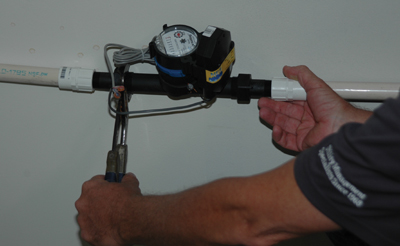
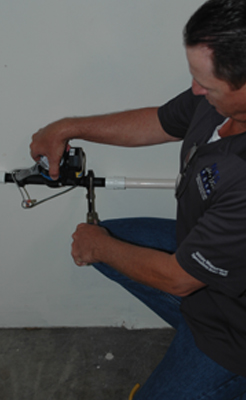
- Site survey. Technicians inspect closets, check pipe sizes, check water pressure, and test shutoff valves to identify shared risers.
- System design and compliance review. NES lays out the wireless network, picks the hardware, and checks local rules. Some states require registration or a certificate before billing, such as the Public Utility Commission of Texas or the North Carolina Utilities Commission.
- Resident notification. Management notifies residents before work starts. When a water line is easy to reach, a meter goes in in under 30 minutes. Water is off only briefly, residents get notice first, and no one moves out.
- Mechanical install. Plumbers install the meter body, wire it to a transmitter, and test the pipe under full water pressure.
- Gateway activation and read validation. Technicians set up the wireless gateway, test repeaters across the property, and run water to confirm the register records flow.
- Live billing transition. Meters transmit reads daily, leak tracking starts, and resident billing goes live on the agreed cycle.
Electric and gas submeter installation
Gas and electric can be submetered too, so residents pay for the energy their own unit uses.
Because gas sub meter installation involves pressurized gas lines, licensed gas professionals must do the work. They check line capacity, test pipe joints, and check venting around the meter body.
Electric projects involve different constraints. The total electric installation cost depends on breaker panel layout, service size, and whether current transformers fit inside existing enclosures. Licensed electricians install electric meters, so those installs vary more by property than water. We quote gas and electric projects after an on-site review rather than using flat rates.
Is submetering expensive?
The real measure of the cost is how quickly the investment pays for itself. Submetering recovers utility costs every month, which protects your operating budget.
Not yet metered
- Units
- 169
- Total gallons
- 987,900
- Gallons per unit
- 5,846
- Average bill
- $84.72
Submetered
- Units
- 168
- Total gallons
- 649,800
- Gallons per unit
- 3,868
- Average bill
- $54.22
All figures are per month, from NES property records, taken about halfway through a rollout that added meters as leases renewed.
Once residents pay for their own water, water use typically drops 15 to 30 percent. The owner stops paying the master-meter bill for private living spaces. Common-area use for laundry, irrigation, pools, and clubhouses stays with the owner. NES never bills residents more than the master-meter cost.
At one 337-unit community, NES added meters as leases renewed, so for a while both setups ran side by side. The 168 submetered units averaged 3,868 gallons per unit per month, 34% less than the 5,846 gallons used by the 169 units not yet metered. Their average bill was $54.22 a month against $84.72, 36% lower, or about $30 per unit. Across all 337 units, that gap is worth roughly $123,000 a year.
Against an average install cost of $150 to $300 per unit, whether submetering saves money comes down to the math. Most properties earn back the install cost in 12 to 18 months from the cost they recover, and some sooner. NES offers financing for properties that qualify, which helps spread the initial price over time.
How to read a submetering quote
Look past the total. When choosing a submetering company, confirm you are looking at the same equipment quality, service scope, and support.
An NES bid itemizes:
- Equipment specifications. Meters, transmitters, and repeaters by brand and model with the warranty term.
- Meter ownership terms. A clear confirmation that you own the equipment and the hardware is nonproprietary.
- Itemized labor rates. Installation labor per unit, with units that need a water heater moved priced separately.
- Service inclusions. The monthly billing fee per unit and what it covers, including our bilingual customer service team.
- Compliance filings. Any state registration or certificate work, like filings with the Texas PUC or North Carolina Utilities Commission.
- Pro forma payback. Projected payback calculated from your own master-meter bills.
How to get an accurate number for your property
Published averages offer a helpful starting point, but an exact quote requires your real bills. Plumbing layouts, local water rates, and sewer formulas shape the final scope.
Send 12 months of master-meter bills and the unit count to start. You can test basic figures through our ROI calculator or speak directly with our team. An NES specialist reviews your plumbing layout, checks local rules, and provides a recovery model.
Related questions
Get submetering and compliance updates
A short email when we publish new guides or a state changes its billing rules. No sales sequences, and you can unsubscribe any time.
We handle your email as described in our privacy policy.
Get an itemized estimate for your community
Send 12 months of master-meter bills and the unit count to request a quote. A specialist replies within one business day, and the full recovery model follows within five business days. The estimate is free and there is no obligation, or you can call our sales line directly at (800) 572-7060.